-
Fair and transparent trading:
For the procurement of articles and services, besides quality, price, and delivery date, we select our partners based on ethical standards by measuring their compliance with laws and regulations as well as social norms. -
Compliance with laws, regulations, and social norms:
We will comply with the laws, regulations, and social norms of each country. -
Respect for human rights and consideration of the work environment:
We respect internationally declared human rights standards and promote procurement activities with consideration for the work environment. -
Promotion of green procurement with consideration for the environment:
To promote environmentally-friendly manufacturing, we adopt components with less environmental loads in a preferential manner, to contribute to the reduction of loads on the global environment. -
Existence and co-prosperity with partners:
We will build better partnerships with all our partners to achieve common goals, both domestically and overseas.
Watches

Here we outline our four businesses, through which we contribute widely to the lives of people around the world.
Machine tools

Citizen began production of machine tools in 1936, utilizing the technologies and know-how developed through the manufacture of watch parts. Our products contribute to the development of manufacturing industries all over the world.
Corporate Philosophy

Loved by citizens, working for citizens.
CITIZEN's corporate philosophy, "Loved by citizens, working for citizens" is to
deeply contribute to the lives of people around the world through the manufacturing of products that are loved and trusted by citizens.
Message From President & CEO
Crafting a new tomorrow Towards sustainable value creation
IR Library

CITIZEN REPORT(Integrated Report)
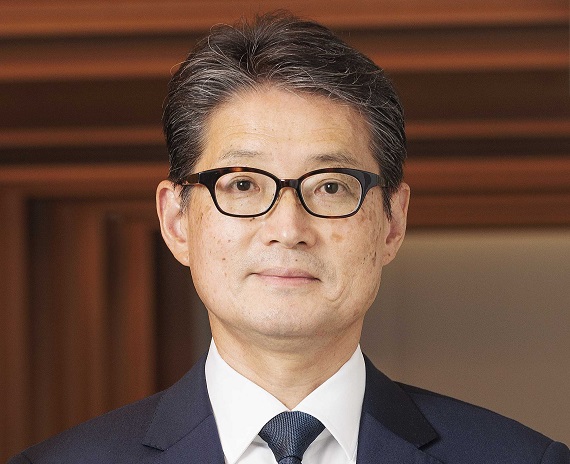
Top Management
By further promoting sustainable management, we aim to become a company that can create value sustainably
Sustainability Management
CITIZEN Group’s Sustainable Management
- TOP
- Sustainability
- Social: Promoting Sustainable Procurement
Promoting Sustainable Procurement
Basic Approach to Sustainable Procurement
The CITIZEN Group aims to contribute to a sustainable society through the realization of "sustainable factories" that take into consideration not only the manufacturing facilities themselves but also the manufacturing processes. A "sustainable factory" is a concept in which the entire value chain, including suppliers, is a sustainable factory. Collaboration with suppliers, who play a key role upstream in the value chain, is essential for the realization of a sustainable factory, and we practice sustainable procurement (CSR procurement, responsible minerals procurement, and green procurement) as well as production system development that comprehensively considers compliance, human rights, labor practices, BCP, and productivity improvement.
Sustainable Procurement
Sustainable Procurement Promotion System
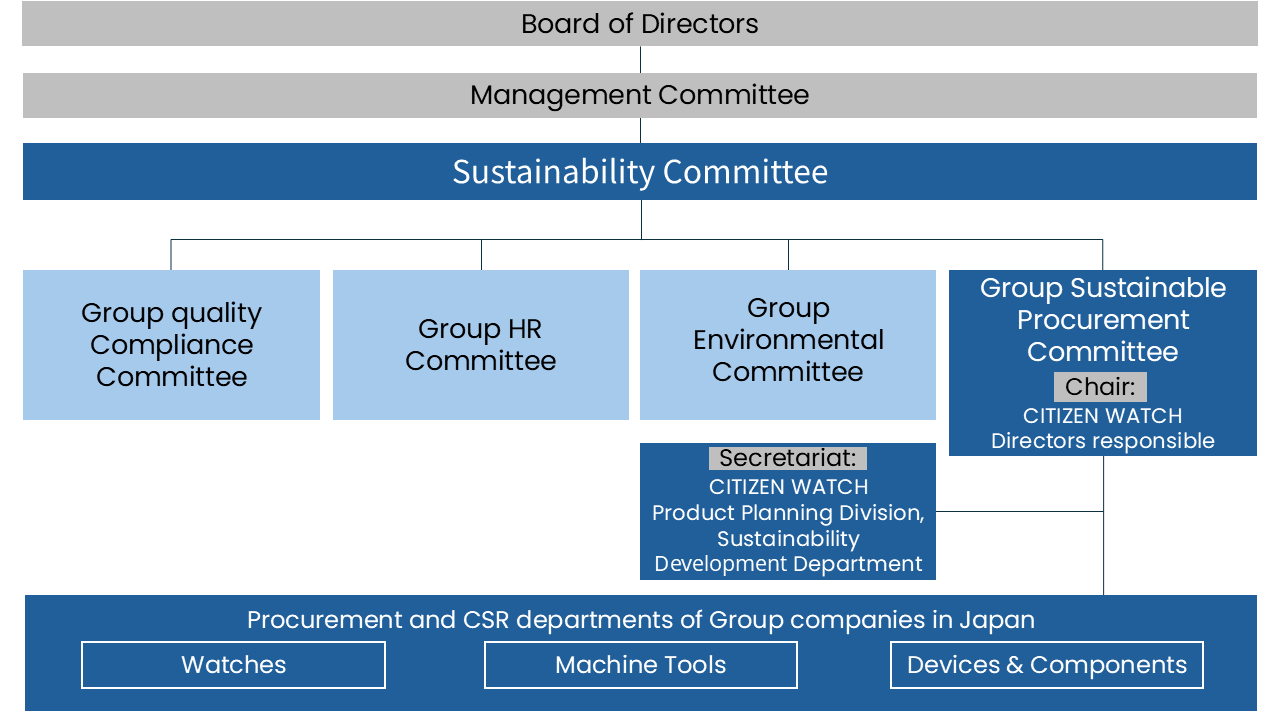
As a framework for promoting sustainable procurement, the Group Sustainable Procurement Committee has been established under the Sustainability Committee, with the Product Management Department and the Sustainability Promotion Department of Citizen Watch Co., Ltd. as the secretariat. This committee is chaired by the director in charge of sustainability at Citizen Watch Co., Ltd. and has members from the procurement departments, CSR departments, and environmental management departments of Group companies. The committee meets twice a year to strengthen inter-group cooperation through partnerships with suppliers and to confirm the procurement status in order to realize sustainable procurement for the entire group, leading to a better understanding of the actual status of suppliers and the prompt implementation of requests for correction and other measures.
To promote sustainability throughout the supply chain, The CITIZEN Group has established The CITIZEN Group Procurement Policy and is promoting sustainable procurement. We request our suppliers in Japan and overseas to comply with The CITIZEN Group Sustainable Procurement Guidelines, and ensure that they have a thorough awareness thereof. Based on the UN Global Compact and The CITIZEN Group Code of Conduct, these guidelines define the requirements to be met throughout the supply chain, including respect for human rights, environmental conservation, occupational health and safety, and fair trade. As a corporate group operating both in Japan and overseas, The CITIZEN Group promotes the employment of local people, mainly from the areas where its business sites are located. One of the aims of this initiative is to make a valuable contribution to local communities. In addition, we promote appropriate local procurement of materials, parts, and equipment in accordance with both the characteristics of the product and the production environment.
The CITIZEN Group Procurement Policy (Established April 2017)
The CITIZEN Group Sustainable Procurement Guidelines
The CITIZEN Group Sustainable Procurement Guidelines present the Group’s stance on how it responds to recent changes in the social and economic situations, international norms, such as the UN Global Compact, and the requirements of stakeholders. We also request that our business partners endorse the guidelines and take part in our self-assessment questionnaire (SAQ) surveys, with the responses being useful in ensuring their full awareness of the guidelines. The guidelines also include a wide range of elements, including those that help address social issues in the fields of human rights, labor practices, etc., guiding us to contribute to the achievement of the SDGs.
The CITIZEN Group’s CSR Procurement Guidelines (Established April 1, 2017. Amended April 1, 2020)
Introduction
The CITIZEN Group (CITIZEN WATCH Co., Ltd. and its group companies) aims to contribute to the wellbeing of the world’s population through "manufacturing activities that are well-loved by and friendly to citizens", by adhering to the corporate philosophy of being "Loved by citizens, working for citizens." With this corporate philosophy as its slogan, The CITIZEN Group intends to create strong partnerships with its business partners who give due consideration to social issues and actively promote CSR, based on the spirit of the United Nations Global Compact concerning human rights, labor issues, the environment and corruption prevention, and by strictly abiding by the "Code of Behavior Charter of The CITIZEN Group".
While we have been encouraging our business partners to be involved in CSR initiatives, we have revised our "The CITIZEN Group’s CSR Procurement Guidelines" in order to further develop the relationships of mutual trust with our business partners and to proceed with responsible procurement activities, towards the realization of a sustainable society.
We sincerely ask all our partners to understand and agree to the aims of the Guidelines and cooperate with us in promoting CSR procurement activities, including further propagation of the initiatives in their supply chains.
Corporate Governance
-
- Establishment of a CSR promotion system
-
We endeavor to conduct business activities to achieve a sustainable society while observing the law as a responsible company, abiding by social norms, meeting society’s expectations, and taking care not to have a negative impact on society and the environment. To this end, we have established a system for the management of ESG (environment, social, and governance) risks related to CSR and for implementing the PDCA (plan, do, check, and act) cycle.
-
- Healthy business activities
-
With a view to establishing an organizational structure for sound corporate management, we have established management systems and schemes within our company to ensure compliance with laws and regulations related to our business activities, the effectiveness and efficiency of our operations as a company, and the reliability of financial reporting and asset protection. We hereby also secure proper and effective business execution, transparency of management, and a multifaceted management monitoring system.
-
- Risk management
-
Toward the enhancement of our corporate governance and product quality compliance, we have secured and established schemes to verify the progress of our addressing risks and our response status against important risks as well as to respond to new risks, including ESG risks such as those related to compliance and the BCP (Business Continuity Plan), trade secrets, intellectual property, information security, labor practices, and environmental problems, in addition to financial risks.
-
- Establishment of a whistleblower system
-
For prevention, early detection, and improvement in the self-cleaning functions of compliance-related problems in our company’s business activities, such as legal violations or wrongful acts or acts that could be a compliance problem, or for our employees who themselves have suffered human rights or labor abuses, we have secured a system for our employees to directly report to or consult with a dedicated department or outside contact, even anonymously. We have also secured a system to ensure confidentiality and to make sure that the whistleblower or the persons who have consulted will not be treated unfavorably.
-
- Disclosure of information
-
We place importance on the relationships with society and stakeholders in our business activities, and we promptly and accurately disclose financial information and nonfinancial information in response to requests for transparency and accountability.
Human Rights
-
- Respect for human rights and the prohibition of discrimination
-
We support and respect the protection of internationally declared human rights*, and strongly denounce any kind of discrimination (including but not limited to any discrimination based on gender, sexual orientation, sexual expression, age, existence of a disability, nationality, race, skin color, religion, and marital history).
- * The Universal Declaration of Human Rights, International Labor Organization’s Declaration on Fundamental Principles and Rights at Work, Ten Principles of the UN Global Compact, UN Guiding Principles on Business and Human Rights, OECD Guidelines for Multinational Enterprises, and UK Modern Slavery Act, etc.
-
- Avoidance of complicity in human rights abuses
-
We take due care so that none of our business activities, products or services will ever cause human rights abuses or lead to complicity in human rights abuses. Should it become clear, however, that we have happened to be involved in any of such issues, we will promptly make corrections and remedy the situation by undertaking appropriate procedures.
-
- Prohibition of inhumane treatment
-
We respect the human rights of our employees and prohibit any kind of inhumane treatment such as abuse, physical punishment, and harassment.
Labor
-
- Corruption prevention
-
Maintain sound relationships, including the proper management of hospitality, with government agencies and public officials in the countries and regions where we conduct business activities.
-
- Prevention of the giving and receiving of improper advantages
-
We maintain healthy relationships with our customers and trade partners, etc. in sales and purchasing activities, etc., by preventing the giving and receiving of improper advantages among ourselves.
-
- Basic attitude toward labor practices
-
We prevent unfair business practices such as bid-rigging, cartels, abuse of dominant bargaining positions, and other unfair trading practices from occurring.
-
- Provision of equal opportunities
-
We recognize that the labor principles presented in international norms* are universal values and adopt them as our basic workplace principles.
- * The Universal Declaration of Human Rights, International Labor Organization’s Declaration on Fundamental Principles and Rights at Work, Ten Principles of the UN Global Compact, UN Guiding Principles on Business and Human Rights, OECD Guidelines for Multinational Enterprises, UK Modern Slavery Act, etc.
-
- Payment of fair wages
-
We abide by the legal minimum wage of the countries and regions where our business activities are conducted and will not reduce wages unreasonably. We abide by the laws and regulations of the countries and regions where our business activities are conducted regarding overtime work, payroll deduction, piecework wage, other benefits, etc. At the time of paying wages, we deliver pay slips that can confirm the accurate rewards corresponding to the work performed, at the appropriate time.
-
- Fair application of working hours, time off, paid time, etc.
-
We abide by the working hours agreed upon with the employees in advance and ensure that employees’ working hours are managed appropriately so that they do not exceed the statutory limit in the countries and regions where our business activities are conducted, and we also seek to prevent excessive overtime work. All our employees are given the right to take paid time off and also given at least one day off per week.
-
- Prohibition of forced labor
-
We avoid making people work against their will and making people do work that restricts their freedom to leave their jobs. We ensure that work coercion using unjustified means of restraint, compulsory overtime work and bonded labor, slave labor, prison labor, etc. are not practiced and that the unjustified retention of identification documents and the unjustified collection of deposits are not practiced.
-
- Prohibition of child labor
-
We avoid employing children under the legal working age in the country and region where our business activities are conducted. We ensure that children are not made to perform night work, dangerous work, etc. that could harm their health, development, safety, or morals.
-
- Recognition of the freedom of association and the right to collective bargaining
-
We respect the basic labor rights of our employees, such as their freedom of association, freedom to join a labor union, and their right to collective bargaining.
-
- Proper management of employees’ health and safety
-
We secure the safety of the work environment and perform inspections and proper maintenance of our facilities thoroughly so as to prevent unforeseen accidents and disasters. We understand the risks of harmful chemical substances, noise, odors, etc. on the human body, and ensure sanitary, safe, and healthy work environments. We promote the creation of a workplace that is considerate of employees’ mental and physical health.
The Environment
-
- Basic attitude toward environmental initiatives
-
We should be aware of environmental issues in business processes and establish systems to resolve them. We also identify factors that have an impact on the environment and properly manage them.
-
- Management of chemical substances
-
We manage chemical substances indicated in the laws and regulations of the countries and regions where our business activities are conducted and ascertain and report the amount of handled chemical substances to the government properly.
-
- Reduction of the environmental burden
-
We endeavor to prevent the occurrence of pollution, monitor and control wastewater, sludge, and air emissions, etc., and reduce outflow. We also set our independent reduction targets for the reduction of the environmental burden at the level prescribed by law in the countries or regions where our business activities are conducted or set even more rigorous voluntary environmental impact reduction targets and make further improvements thereof.
-
- Sustainable and efficient utilization of resources (energy, water, raw materials, etc.)
-
We set our independent reduction targets for implementing resource conservation and energy savings, and make efforts to use resources and energies effectively and continuously.
-
- Reduction of GHG (greenhouse gas) emissions
-
As a means to combat climate change, we set our independent reduction targets for greenhouse gases such as CO2, methane, and fluorocarbons, and endeavor to reduce them continuously.
-
- Reduction of waste
-
We set our independent reduction targets for waste, and endeavor to conduct the responsible disposal or recycling of waste.
-
- Protection of biodiversity
-
We conduct investigations into the direct and indirect impacts of our business on the ecosystem, and endeavor to protect biodiversity and ensure the sustainable utilization of the environment.
Fair Business Practices
-
- Corruption prevention
-
We maintain healthy relationships with national/local governments and public officials in the countries and regions where our business activities are conducted by establishing appropriate relationships with them.
-
- Prevention of the giving and receiving of improper advantages
-
We maintain healthy relationships with our customers and trade partners, etc. in sales and purchasing activities, etc., by preventing the giving and receiving of improper advantages among ourselves.
-
- Prevention of competition law violations
-
We prevent unfair business practices, such as bid-rigging, cartels, abuse of dominant bargaining position, and other unfair trading practices, from occurring.
-
- Rejection of relationships with antisocial forces
-
We prohibit our employees from contacting and giving any benefits to antisocial forces.
-
- Respect for a third party’s intellectual property
-
We respect intellectual property rights, including patent rights, copyrights, and trademark rights, and do not infringe on others’ intellectual property rights.
-
- Prohibition of insider trading
-
We prohibit persons involved with a listed company, etc. from using undisclosed company information to trade that company’s stocks, etc.
-
- Prohibition of acts with conflicting interests
-
We prohibit our employees from enjoying personal benefits at the expense of the company’s benefits. Any act that may be interpreted as such must be avoided and appropriate trading must be pursued.
-
- Services for responding to complaints from outside the company and for consultations
-
Our trade partners or customers who have knowledge of important risk information can directly report or consult with a dedicated outside contact department of our company. We have established a system to ensure confidentiality and to ensure that the informant will not be treated unfavorably.
-
- Establishment of a BCP (Business Continuity Plan) system
-
We have established a system wherein in the event of an emergency such as a natural disaster, quick restoration is realized while important duties and businesses can continue.
-
- Management of confidential information and protection of private information
-
We perform proper management to ensure that none of the confidential information of our customers, business partners, our own company, etc. is ever leaked. We also properly manage and protect the private information of our customers, trade partners, employees, etc.
Quality and Safety
-
- Ensuring product and service quality and safety
-
We provide products and services that meet the necessary quality and safety standards as stipulated in the laws and regulations of the countries and regions where our business activities are conducted.
-
- Appropriate response to product and service accidents
-
In order to prepare for situations where any accident relating to our product or service has occurred or where any defective goods of our company have been circulated, we have established a system through which we disclose information promptly, notify the relevant authorities of the situation, recall the product in question, take safety measures for our supply destinations, and strive to prevent a recurrence.
-
- Response to our customers’ need
-
We provide environmentally friendly and socially beneficial goods and services that pursue quality and costs acceptable to our customers by correctly grasping the social needs.
Information Security
-
- Basic attitude toward information security
-
We properly manage and protect information obtained through our business activities and take defensive measures against threats to our computer networks.
-
- Defense against attacks on computer networks
-
We take defensive measures against attacks on our computer networks and ensure the effective management of threats to avoid damage to our company and any other companies.
Supply Chain
-
- Basic attitude toward the supply chain
-
In order to fulfill social responsibility regarding not only our company but also the whole supply chain, we endeavor to make the importance of a sustainable procurement policy widely known among our trade partners.
-
- Responsible procurement of minerals
-
We make it our company’s policy not to purchase or use raw materials containing tantalum (Ta), tin (Sn), tungsten (W) or gold (Au), which are conflict minerals linked to inhumane acts committed by local armed groups in the Democratic Republic of the Congo and its surrounding regions.
Harmonious Coexistence with Local Communities
-
- Contribution to local communities
-
We respect the culture and customs in the countries and regions where our business activities are conducted and carry out initiatives that can contribute to the sustainable development of local communities.
Policy-Based Risk Management
The CITIZEN Group Procurement Policy requires the Group to conduct procurement activities based on adherence to The CITIZEN Group Sustainable Procurement Guidelines, while complying with laws and regulations, respecting human rights, promoting environmentally friendly manufacturing, and paying due consideration to the work environment. The Group Sustainable Procurement Guidelines also include requirements related to human rights: prohibiting forced labor and child labor, respecting the right of workers to engage in collective bargaining, paying fair wages, and appropriately managing working hours. Furthermore, the basic provisions in the Watches Business’s business contracts are compiled based on the abovementioned Policy and Sustainable Procurement Guidelines, with sustainability clauses included in its contracts with suppliers.
Sustainable Procurement Initiatives
Assessment Program
The procurement assessment program follows the cycle illustrated below.
By repeating this cycle, we aim to upgrade our sustainable procurement.
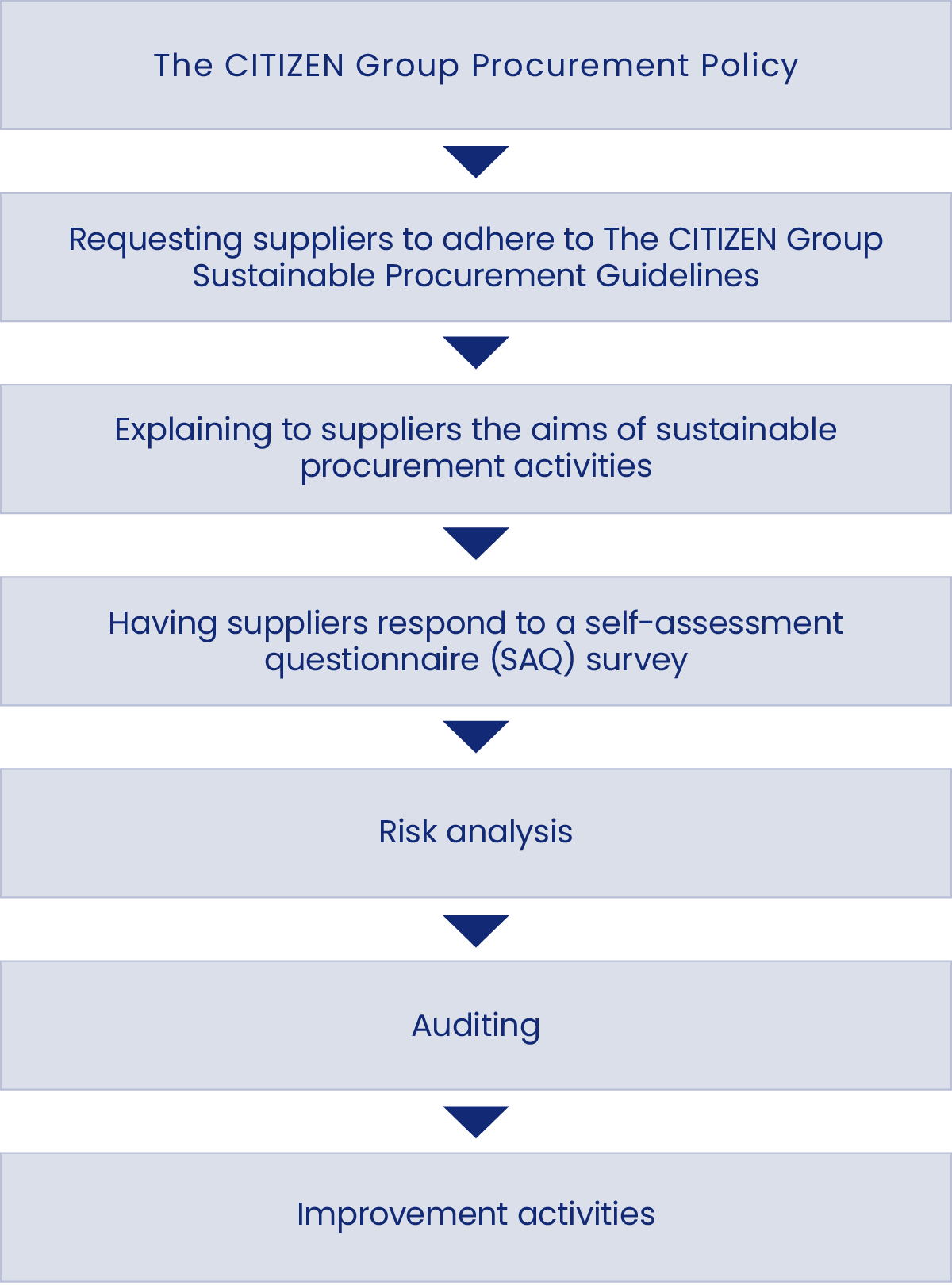
As part of a step that corresponds to "①-1. Identifying risks" in "Constant due diligence process in the supply chain" stipulated by "A Vision of Desirable CSR/Sustainable Procurement—A Proposal Submitted by the Supply Chain Working Group—" published by GCNJ in July 2025, the CITIZEN Group has been conducting an SAQ survey of suppliers. We maintain close communication with our suppliers to ensure that they understand our due diligence processes and initiatives.
Communication with Suppliers
The CITIZEN Group has made constant efforts to fully inform all its key suppliers in the countries where its production sites are located, including Japan, China, and Thailand, about the CITIZEN Group Sustainable Procurement Guidelines on an annual basis. In addition, we have created a document titled "Requests to Our Business Partners," which summarizes The CITIZEN Group’s environmental, human rights, and anti-corruption policies, in three languages—Japanese, English, and Chinese. We distribute the document to our suppliers and maintain records of its distribution. Moreover, when we talk to suppliers about sustainability, we clearly communicate the CITIZEN Group’s policy on sustainable management and its approaches to materiality, sustainable procurement, mineral exploration, responses to climate change, etc. By doing so, we aim to achieve sustainable procurement in collaboration with our suppliers.

Self-Assessment Questionnaire (SAQ) Surveys of Suppliers
Identifying Risks through SAQ Surveys
As part of its efforts to identify sustainable procurement-related risks, The CITIZEN Group conducts self-assessment questionnaire (SAQ) surveys of suppliers. We use a common SAQ developed by GCNJ. It consists of 114 questions about basic CSR issues, including human rights, the environment, and fair business practices.
SAQ-Based Risk Analysis
We have established a system to award a risk rank to each supplier based on the percentage of its total score derived from a radar chart analysis of its SAQ results and to collect SAQ responses online, thereby identifying suppliers with heightened procurement risks based on their survey results and responses.
Recognizing that supplier risk assessments can produce fluctuating results according to the changing external situation, we are promoting efforts to improve our risk assessments, including increasing their accuracy and auditing high-risk suppliers. The supplier audits focus especially on human rights, labor, and the environment.
SAQ-Based Risk Ranks
Please scroll down to see→
| Risk rank | Score percentage | Description |
|---|---|---|
| Low risk | 80% or more | The supplier’s conduct basically meets the requirements of The CITIZEN Group Sustainable Procurement Guidelines. There are some areas where improvements are necessary, but the supplier is considered able to make the improvements autonomously. |
| Middle risk | 50 to 79% | The supplier’s conduct does not meet some requirements of The CITIZEN Group Sustainable Procurement Guidelines, but the supplier is considered able to make improvements autonomously. |
| High risk | 49% or less | The progress of the supplier’s improvement plan must be monitored in the areas where its conduct does not meet requirements of The CITIZEN Group Sustainable Procurement Guidelines. |
Supplier Audits in Response to the SAQ-Based Risk Assessment Results
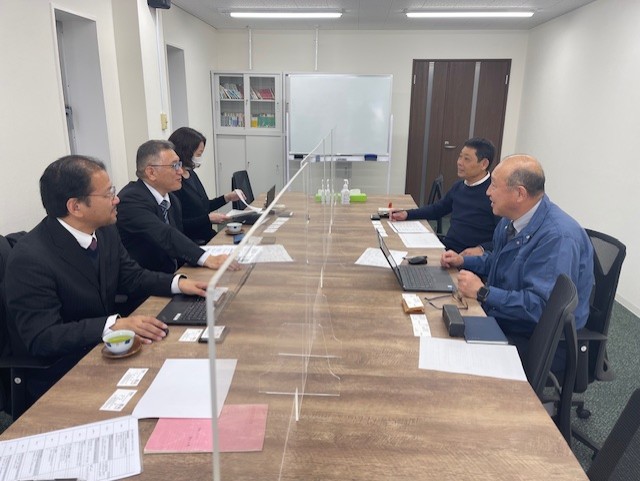
In FY2025, from among the suppliers to whom we sent the SAQ throughout the Group’s supply chain, we audited a total of 17 suppliers, focusing on human rights, environmental, and ethical risks. The audit involved not only a preliminary document-based survey but also an on‑site inspection, a document review, interviews, etc., being systematically conducted with a checklist based on the Sustainable Procurement Guidelines.
Key Suppliers
We designate suppliers of high-volume, irreplaceable, or critical items as key suppliers and focus on involving them in our efforts toward sustainable procurement. In addition, to address identified risks in regional, sector-based, procurement, and other categories, we are enhancing our risk-management and engagement efforts.
Selection and SAQ Surveys of New Suppliers
Before beginning business relationships with new suppliers, we make a careful supplier selection in accordance with our purchasing rules and enter into basic business contracts with them that include environmental, social, and governance (ESG) clauses. In addition, we have established a risk assessment system in which we request new suppliers to respond to the same SAQ survey as the annual SAQ survey our existing suppliers respond to at our request.
Together with the SAQ, a set of documents, including The CITIZEN Group Anti-Corruption Policy, is distributed to new suppliers.
Human Rights Due Diligence in the Supply Chain
Significant Human Rights Issues and Risk Reduction Measures
The CITIZEN Group has practiced human rights due diligence since 2021. Our human rights impact assessments have revealed that there are human rights challenges to be solved in our handling of conflict minerals and the working environment at raw material suppliers.
To break away from conflict minerals, we are implementing a due diligence initiative with smelters dedicated to the respective 3TG minerals.*1
> Refer to the section for responsible minerals procurement activities.
In FY2025, we reassessed the human rights impacts of the entire value chain of The CITIZEN Group. The reassessment identified conflict mineral risks and issues in the working environment at raw material suppliers (health damage and contamination caused by high temperatures, dust, chemical substances, etc.) in the upstream supply chain. We will continue to implement preventative measures going forward.
In light of the results of the FY2025 human rights impact assessment, from FY2027 onward, we will replace our current supplier management approach using SAQ-based assessments with the risk-based approach of focusing on high-risk areas while placing high importance on audits and on-site verifications.
We will dedicate FY2026 to preparing for the shift in approach, building a system for enhancing our audits.
| Significant human rights issues | Risk reduction measure |
|---|---|
| Conflict mineral risks | Procurement from RMAP-compliant smelters*2 |
| Health damage and contamination caused by high temperatures, dust, chemical substances, etc. | Supplier audits and remediation |
For information on human rights due diligence in the value chain, please see the page for "Respect for Human Rights."
Supplier Audits concerning Significant Human Rights Issues
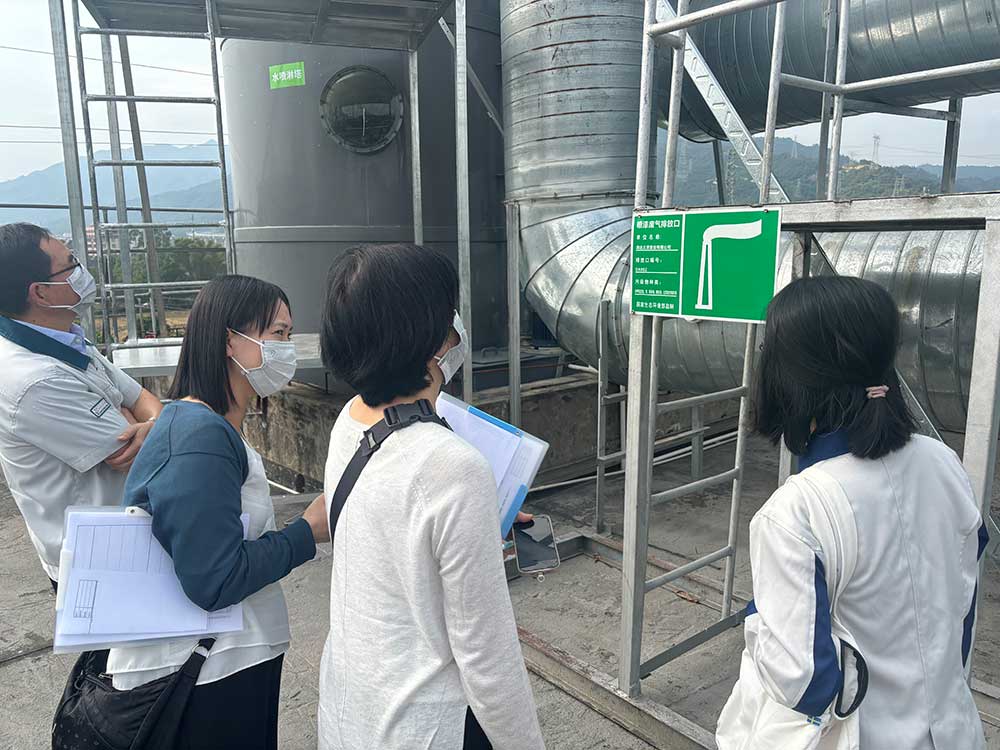
From among significant human rights issues, our supplier audits focus on issues in the working environment at raw material suppliers, using our originally developed Occupational Health & Safety and Labor Management Checklist to confirm the appropriateness of the working environment at each supplier. Since FY2023, we have audited our Chinese suppliers in the Watches Business (five suppliers in FY2023 and in FY2024, and six in FY2025). The audits have revealed potential human rights risks in the working environment, and we have adopted preventive measures as appropriate. We will further enhance our audits in FY2026.
Buyer Training
Since FY2020, The CITIZEN Group has provided buyers (purchasing staff) involved directly in procurement operations with an annual training program on sustainable procurement, with an external expert serving as an instructor.
In FY2025, the year for reviewing the identified significant human rights issues, buyers and members of the Group Human Resources Committee attended a lecture on human rights due diligence, especially the OECD Due Diligence Guidance for Responsible Supply Chains of Minerals from Conflict-Affected and High-Risk Areas.
For FY2026, we plan to hold study sessions on the revised CITIZEN Group Sustainable Procurement Guidelines. We will conduct our procurement activities based on the principles of those guidelines.
| Period | Theme |
|---|---|
| FY2020 | Conflict minerals due diligence |
| FY2021 | Identification of human rights risks in the supply chain |
| FY2022 | Establishment and operation of grievance mechanisms |
| FY2023 | Key practices for supplier audits |
| FY2024 | Corrective actions in responsible minerals procurement surveys |
| FY2025 | OECD Due Diligence Guidance for Responsible Supply Chains of Minerals from Conflict-Affected and High-Risk Areas |
Employee Training
Every year, we hold two sustainability seminars for all employees with the aim of regularly providing them with an opportunity to increase their understanding of the importance of sustainable procurement. The seminars have also allowed all employees to deepen their understanding of our supplier hotline (grievance mechanisms). We therefore work to raise awareness of respect for human rights in procurement activities.
| Period | Theme |
|---|---|
| FY2020 | Sustainable Procurement |
| FY2021 | Human rights risks in the Watches Business; supplier hotline |
| FY2025 | Sustainable Procurement |
Supplier Training on Social Issues
As shown in the table below, we held training sessions in conjunction with the audits of the Watches Business’s Chinese suppliers.
| Period | Theme |
|---|---|
| FY2024 | Management of chemical substances |
| FY2025 | Impacts of climate change on human rights |
Support for Suppliers
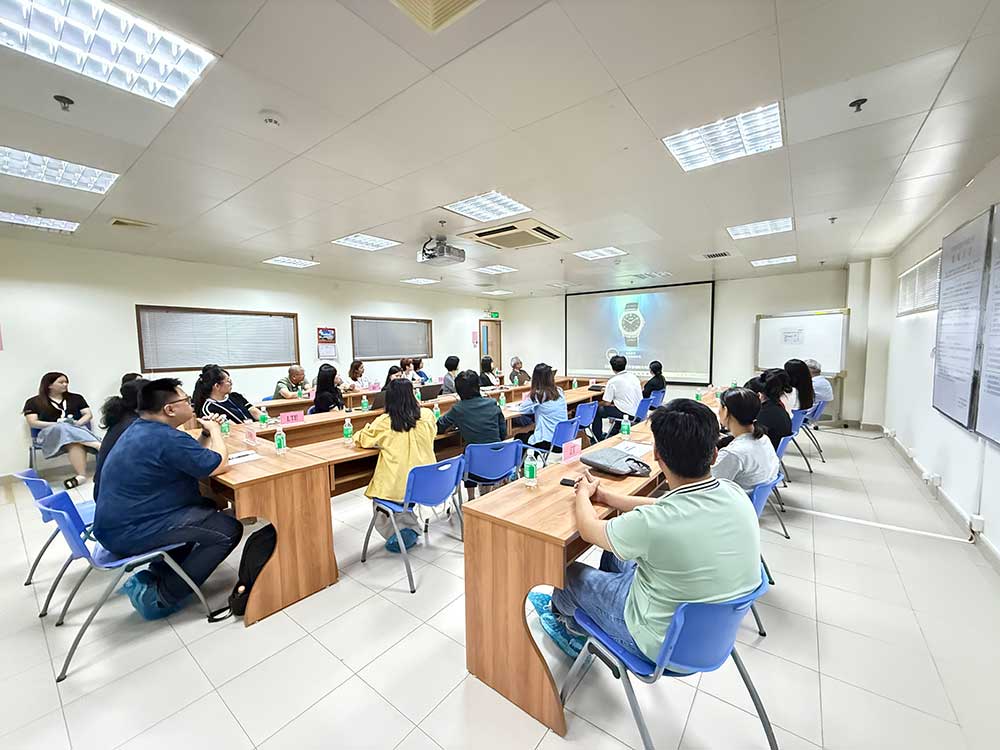
During the audits of the Watches Business’s Chinese suppliers, some of them commented that SAQ questions were difficult to understand, making them wonder how they should answer. Staff of our business sites in China also expressed their concern about the wide gap between suppliers in terms of the level of their responses, making it difficult to evaluate them. To address these issues, we held a briefing session for Chinese suppliers on how to respond to the SAQ in FY2025. The session met with a favorable reaction from attendees, some of whom stated that it was thorough, easy to understand, and helpful for their responses to subsequent surveys.
We will continue to provide similar support in FY2026.
Responsible Minerals Procurement
The CITIZEN Group also recognizes conflict minerals, which carry the risk of funding armed groups and human rights abuses, as an important procurement risk. The CITIZEN Group Responsible Minerals Procurement Policy clarifies the expanded scope of targeted minerals and sourcing regions covered, as well as the actions to be taken when risks are identified. In addition to suppliers procuring the subject minerals, The CITIZEN Group itself is working to eliminate conflict minerals as a supplier by complying with the code of conduct of the Responsible Business Alliance (RBA) at the request of suppliers to whom it delivers parts and other items.
The CITIZEN Group Responsible Minerals Procurement Policy (Established April 2019. Amended January 2021)
To fulfill our social responsibilities in the supply chain in cooperation with our business partners, The CITIZEN Group, as a policy, will not use target minerals*1 that may contribute to any risk of human rights abuses such as child labor or forced labor, environmental destruction, conflict, terrorist financing, money laundering, corruption, or fraudulent financing in mining, trading, handling, export, and our other business activities.
This does not mean, however, that any and all minerals mined and traded in conflict areas and high-risk areas should not be used, and we may use minerals mined and traded in these areas if they are not related to human rights violations, environmental destruction, conflicts, corruption, or other wrongdoings.
If a potential target risk*2 is confirmed, we will ask the relevant business partners to take corrective actions.
- Target minerals: 3TGs (tantalum, tin, tungsten, and gold) and cobalt
- Target risks: Risks included Annex II of the OECD Guidance and the risk of environmental destruction
System for Promoting Responsible Minerals Procurement
At The CITIZEN Group Sustainable Procurement Committee, which convenes twice a year, The CITIZEN Group shares its goals and KPIs for responsible minerals procurement. At the end of the fiscal year, the Sustainability Committee reports and reviews the status of initiatives and holds study sessions to implement ongoing efforts and improvements.
The CITIZEN Group Sustainable Procurement Committee takes the lead in implementing Group-wide measures for responsible minerals procurement, and the status of these measures is shared with the Board of Directors through reports to the Sustainability Committee.
Please scroll down to see→
| Goal | Achievement status | Details of results |
|---|---|---|
| Conduct due diligence on responsible minerals procurement in accordance with the Organisation for Economic Co-operation and Development guidelines (Due Diligence Guidance for Responsible Supply Chains of Minerals from Conflict-Affected and High-Risk Areas) and enhance improvement efforts in response to the results of relevant assessments | Achieved | We have conducted due diligence on conflict minerals in our supply chain in line with OECD guidance and made enhanced improvement efforts. For details, please refer to "Status of Responsible Minerals Procurement Initiatives" below. |
Responsible Minerals Procurement Initiatives (Disclosure and Remediation)
The CITIZEN Group recognizes that 3TG (tin, tantalum, tungsten, gold), which originates from conflict-affected and high-risk areas (CAHRAs) such as the Democratic Republic of the Congo and neighboring countries, is an important international issue because it is a source of funding for armed groups and incites conflict, human rights abuses, and environmental destruction. We also endorse the concept of the OECD Due Diligence Guidance for Responsible Supply Chains of Minerals from Conflict-Affected and High-Risk Areas and are implementing initiatives in line with the framework set forth by the Guidance.
In FY2025, 206 of the 245 specific smelters obtained RMAP certification and confirmed as conflict-free.
The percentage of those in the process of certification or audit was 85.7%. Adhering to this framework, The CITIZEN Group is strongly promoting its Group-wide efforts to eliminate the use of conflict minerals, including disclosing the proportion of smelters that comply with the Responsible Minerals Assurance Process (RMAP) standards and making the necessary improvements at some smelters from the perspective of human rights risks as well.
Framework for Risk-Based Due Diligence as Defined in the OECD Guidance (Steps 1-4)
- Step 1Establish strong company management systems
-
Based on The CITIZEN Group Procurement Policy and The CITIZEN Group Responsible Minerals Procurement Policy, we are promoting Group-wide measures to deal with conflict minerals. Each Group company that may be involved in conflict minerals educates employees in the relevant departments about conflict minerals and requests that suppliers are familiar with and understand The CITIZEN Group Procurement Policy and The CITIZEN Group Responsible Minerals Procurement Policy and comply with The CITIZEN Group Code of Conduct and The CITIZEN Group Sustainable Procurement Guidelines (For Suppliers).
- Step 2Identify and assess risk in the supply chain
-
The 3TG surveys are conducted using the Conflict Minerals Reporting Template (CMRT), a tool provided by the Responsible Minerals Initiative (RMI), to check for the presence of conflict minerals, identify smelters/refiners in the supply chain, and confirm and assess the state of conformity to the Responsible Minerals Assurance Process (RMAP)* standards and the state of suppliers’ initiatives to address subject minerals.
In addition, as for cobalt, a survey using the Extended Minerals Reporting Template (EMRT) has been conducted since FY2021 in accordance with the business characteristics of The CITIZEN Group.
- Step 3Design and implement a strategy to respond to identified risks
-
If the survey identifies risks at suppliers, such as transactions with smelters/refineries that do not comply with the RMAP or a lack of transparency regarding the subject minerals, we inform those suppliers about the identified risks and provide them with consultation and support for improvement, including smelter changes.
Requests from The CITIZEN Group customers to provide supply-chain information are responded to by providing information using the above CMRT and EMRT, along with the additional questioning of suppliers, requests for resubmission of the CMRT or EMRT, and surveying.
- Step 4Carry out independent third-party audits of smelter/refiner due diligence
-
We request suppliers to procure minerals from smelters/refineries conforming to the RMAP standards or to the compliance standards defined by The CITIZEN Group customers. We also seek suppliers’ cooperation in encouraging smelters/refineries to conform to the RMAP standards.
- * Responsible Minerals Assurance Process (RMAP): Program developed by the Responsible Minerals Initiative (RMI)
Other Responsible Minerals Procurement Initiatives
RJC
CITIZEN WATCH COMPANY OF AMERICA, INC. has joined the Responsible Jewellery Council (RJC) since 2019.
Founded in 2005, the Responsible Jewellery Council (RJC) is an international non-profit organization dedicated to advancing human rights, environmental stewardship, and ethical business conduct across the entire supply chain of gold, platinum, diamonds, and other precious materials, from mine to retail.
Lab-Grown Diamonds
As with 3TGs, The CITIZEN Group is also committed to the responsible procurement of diamonds, which are at risk of being involved in disputes.
Citizen Watch Co., Ltd. uses lab-grown diamonds, which are synthetic diamonds of the same quality as natural diamonds, in some of its products. Lab-grown diamonds do not require the mining and processing of rough diamonds and are thus not only ethical, as they are free from the risk of involvement in conflict minerals, but also have only a very minor environmental impact.

Green Procurement
The CITIZEN Group is implementing green procurement, which prioritizes the purchase of products, parts, raw materials, etc. with a low environmental impact from suppliers who promote environmental management activities. We ask our suppliers to understand the importance of environmental management activities and to cooperate with our activities by submitting the Green Procurement Guidelines Declaration of Conformity (14th edition) and the scheme for communicating information on chemical substances contained in products (chemSHERPA) (to be updated in July 2026).
- Reference Information
-
- The CITIZEN Group Green Procurement Guidelines (Revision 14.3)
- Annex (List of Controlled Substances) (Ver. 14_2026)
Documents to Be Submitted by Suppliers
Below are the documents that we request our suppliers to submit in accordance with The CITIZEN Group Green Procurement Guidelines.
- Paper documents to be submitted
-
Declaration of Conformity with The CITIZEN Group Green Procurement Guidelines (Revision 14.3)
- Electronic documents to be submitted
-
Scheme for the Communication of Information on Chemical Substances in Products (chemSHERPA)*
- * Provision of information on the chemical substance content of procured goods: In order to comply with the EU REACH and other laws and regulations concerning the management of information on chemical substances contained in procurement items, we request that our business partners submit information on the chemical substances contained in procurement items, in principle, using the common format (chemSHERPA-CI/AI) provided by the Joint Article Management Promotion consortium (JAMP).

[Case Study] Green Procurement through Collaboration with Suppliers
Citizen Watch (CHINA) Co., Ltd.
The Citizen Watch (CHINA) Co., Ltd. Environmental Management Department manages, audits, and supports improvement of compliance with environmental regulations of exterior parts suppliers in South China based on the CITIZEN Group Green Procurement Guidelines.
We have exchanged Declarations of Conformity with our suppliers based on the latest version of the Green Procurement Guidelines, and we conduct audits of documents, actual products, and sites of important suppliers. We certify suppliers with excellent evaluation results as "Citizen’s Green Partners," and 43 suppliers were certified in 2025. We also held a green procurement briefing session, with 11 suppliers participating in FY2025.
Every year, we conduct surveys of our suppliers on CSR procurement, responsible minerals procurement, and green procurement. Based on parts/materials lists and component information, we confirm the suppliers’ compliance with the latest global regulations (the Restriction of Hazardous Substances Directive [RoHS], the European Regulation on Registration, Evaluation, Authorisation and Restriction of Chemicals [REACH], etc.) and provide them with improvement guidance. In the development stage or at the time of 4M change, we conduct environmental impact assessments of new materials and new suppliers. In the mass production stage, we conduct sampling inspections of incoming parts to confirm that there are no unintended emissions of restricted phthalic acid substances or nickel.
The understanding and cooperation of our suppliers are essential to our environmental efforts. We will continue our dialogue efforts in order to promote sustainable procurement based on CITIZEN’s environmental policy.