




Award summary
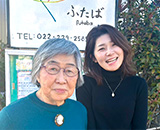
The Yagiyama area, with its steep slopes in Taihaku Ward, Sendai, Miyagi Prefecture, is one of the city's most prominent residential areas. This area was developed during Japan's period of rapid economic growth, and as local children left to pursue higher education or employment, their parents found themselves gradually left behind. "Without any further action, the population will age, and many people will be left alone." The organization began with the sense of crisis felt by a group of housewives in their 50s at the time, led by former representative Akiko Ichibashi (85).
At first, they created a space for people to enjoy tea together once a month, but after learning that the city was seeking a meal-delivery service for senior citizens, they decided to act. Based in a vacant, city-owned house loaned by the city, they established Futaba no Kai in September 1995 and began delivering handmade meals. Initially, the small operation delivered just 10 meals a week on foot, but it rapidly expanded as requests came in. By the sixth year, the operation had expanded to six days a week, and in 30 years, a total of 450,000 meals had been delivered. Currently, Futaba no Kai delivers lunch on Mondays, Wednesdays, and Fridays, and dinner on Tuesdays and Thursdays, at a price of ?550 per meal* for eligible people aged 65 and over. *The cost paid by recipients. Operations are also supported by city subsidies.
The best part of the service is that recipients can taste home-style meals made by housewives. Polished rice delivered weekly by farmers is cooked in a gas-powered rice cooker, and ingredients are carefully selected with attention to additives and pesticides. The gentle, seasonal flavors, such as pumpkin served in winter, have long been enjoyed by recipients as the taste of Futaba no Kai. The meals are prepared in bento boxes and wrapped in colorful cloth, creating a sense of anticipation when they are opened. Together with the driver, the person who prepared the meal delivers it directly, and conversations at the doorstep serve as both a way to check on the well-being of senior citizens and emotional nourishment for both recipients and staff.
The three decades of service have not been without their challenges, however. When the long-term care insurance system was introduced, they were told that volunteer meal delivery services were no longer necessary, but thanks to strong support from recipients, the service continued. In the aftermath of the Great East Japan Earthquake in 2011, despite water and power outages, volunteers went down the mountain through snow to fetch water and resumed activities on the Monday immediately following the disaster. Even during the recent COVID-19 pandemic, they pressed on, and their commitment to ensuring meals would always be delivered earned them the steadfast trust of the local community.
However, after 30 years of continued activity, many members were now in their 80s or older, and in July 2024, Akiko Ichibashi made the painful decision to end activities in March 2025. It was at this critical moment that Ayano Ogawa (36), a nurse who had begun volunteering after learning of the labor shortage, came to the rescue. Moved by seeing her elders work with such energy, Ayano resolved to carry on the work, saying, "This place must never be lost. If the continuation of this group, which has lasted 30 years, depends on me, then I will carry it forward."
And in April 2025, she became the new representative, and Futaba no Kai embarked on a new path. She maintained the tradition of offering home-style meals while streamlining the cooking process and establishing a system that allows staff to continue their work without undue strain. Drawing on her knowledge of medicine and social welfare, Futaba no Kai began offering special meals, including chopped foods and thickened sauces. Looking ahead, the organization plans to expand its activities to address food-related challenges faced by people of all generations, including households with children. They have also launched a salon space at their home base for intergenerational interaction to foster community connections.
What began as an initiative driven by housewives who wished to ensure that people could continue living in the communities they know has, through food, created both watchful support and connections. This legacy will be passed on to the next generation, continuing to provide warm support in the Yagiyama area for years to come.
 They deliver the taste of home-style meals made at home. The taste of Futaba no Kai food has gained recipients' trust.
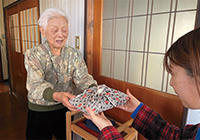 Meals are delivered by the hands that made them, offering affirmation that seniors are not alone.
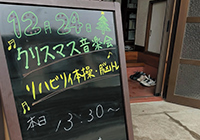 In April 2025, Ayano Ogawa became the new representative, and Futaba no Kai launched a salon space to facilitate intergenerational interactions. Interactions across 3 generations are a joy.
 When color is lacking, veteran members lend their knowledge and ingenuity to the meals.
Reasons for this award
We were deeply impressed by the more than 30 years of continued delivery of handmade meals. As dying alone has become a social issue in Japan, delivering warm meals to senior citizens provides not only nourishment but also a powerful affirmation that seniors are not alone, helping to forge connections between people. We hope for the day when this precious work, which has continued to complement roles that society itself should fulfill, will no longer be necessary, and we wish to support and promote its value. At a time when many organizations are forced to cease operations due to a shortage of volunteers, we also highly value the fact that this spirit has been successfully passed on to the younger generation, which led to this award.
Comments from the winner
Thirty years ago, we established this organization and began preparing meals so that senior citizens familiar with the area could stay here, even as they age. The meals made by housewives have been well received, and our activities have grown from small to larger, with volunteers joining to help prepare meals. As the original staff members grew older and the organization was on the verge of closure, a professional member who had been involved in home-based medical and welfare services took over, and we were reborn as the new Futaba no Kai. I hope that Futaba no Kai will continue to be a warm presence supporting the community for many years to come.


